Franklin County Engineer Facebook Feed

Franklin County Engineer

As a local public works agency headquartered in Columbus, Ohio, the Franklin County Engineer's Office is responsible for the maintenance and construction of 271 miles of county roadway and 351 county bridges, as well as upkeep of all county ditches, drains, retention basins, and other storm water facilities within the right-of-way of county roads in unincorporated areas. To meet the continuing development and infrastructure needs of Franklin County, the Engineer's Office utilizes the latest technologies for determining and maintaining roadway centerlines and boundaries; retracing and setting new monuments for original public land surveys; preparing geographic information system mapping for real estate tax assessments; and establishing precise countywide horizontal and vertical control to maintain uniformity in construction, surveying, and mapping.
Franklin County Engineer
Rain may have been in the forecast, but it did not stop the successful 2nd Annual Spring Training Days at FCEO. Thank you to our outstanding presenters from FCEO, fellow government agencies, and community partners who shared their time, knowledge, and expertise with our team. Investing in learning, collaboration, and professional growth helps keep us strong as an organization and better prepared to serve the public.
Franklin County Engineer
Notice to Contractors: We are accepting bids on the Franklin County Engineer’s Office 2026 General Bridge Maintenance Contract. Visit: https://www.bidexpress.com/solicitations for more information.
Franklin County Engineer
Rohr Road, between Bixby Road and Creekside Parkway, will be closed beginning Monday, May 4, 2026, for road widening work. The closure will last approximately sixty (60) days, weather permitting.
Franklin County Engineer
April is National Records and Information Management Month, a time to recognize the work that helps public agencies stay organized, transparent, and efficient. At the Franklin County Engineer’s Office, accurate records and reliable information support infrastructure planning, project coordination, maps, permits, and public service. Thank you to those who help keep our agency informed, accountable, and operating effectively. #RIMMonth
Franklin County Engineer
Great energy, nice weather, and great community spirit! #TeamFCEO was proud to join Celebrate Trails Day at Scioto Audubon Metro Park. The annual event featured live music, local vendors, food trucks, activities, and fun for all ages while celebrating the value of trails in our community. #CelebrateTrails
Franklin County Engineer
Yesterday, #TeamFCEO welcomed the next generation to our office for Bring Your Child to Work Day! From big equipment to hands-on activities and behind-the-scenes fun, it was a day full of learning, laughter, and smiles. Thank you to everyone who helped make it a great day!
Franklin County Engineer's Office
970 DUBLIN ROAD
COLUMBUS, OHIO 43215
(614) 525-3030
fracoeng@franklincountyengineer.org

Follow Us

Top
 

Highway Chronicle Chapter 1

Highway Chronicle Chapter 1

Native American Paths Serve as Early Roads
road
ride

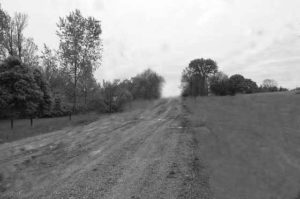
Metropolitan Columbus has not always been a maze of highways, roads and streets. In fact, shortly after the founding of Ohio and Franklin County in 1803, the only means of travel were by buffalo traces, Native American paths, and swift flowing rivers.

‘Roads’ throughout the state were those wild thoroughfares with the fewest tree stumps, potholes and brush. But access to the central Ohio area that would become Columbus could not be denied.

One of the most significant Native American routes, adopted by pioneers, was the Scioto Trail that followed the Scioto, Little Scioto, and Sandusky Rivers from Lower Shawnee Town (Portsmouth) north to Lake Erie. The widely traveled path illustrated the economic and social importance of roadways, serving as a lifeline for the frontier settlements of Chillicothe, Franklinton, and Worthington. Proximity to the trail was a deciding factor in locating Columbus at the confluence of the Scioto and Olentangy Rivers.

A need for less cumbersome travel to Newark leads the state legislature to incorporate the Franklin Turnpike Company in 1816. Settler and surveyor Lucas Sullivant, founder of Franklinton, guided the civic organization that oversaw the joining of old trails with newly built roads to establish the area’s first official highway.

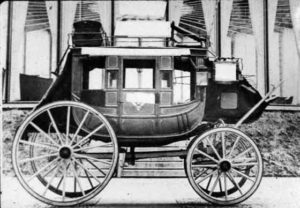
By 1820, entrepreneur Philip Zinn was operating the first weekly mail and passenger stagecoach service to Newark, Lancaster, Chillicothe, Springfield and Worthington. An early advertisement proclaimed that a trip from Cincinnati, through Dayton and Columbus, to Upper Sandusky could be made in four days, traveling 50 miles per day.