Franklin County Engineer Facebook Feed

Franklin County Engineer

As a local public works agency headquartered in Columbus, Ohio, the Franklin County Engineer's Office is responsible for the maintenance and construction of 271 miles of county roadway and 351 county bridges, as well as upkeep of all county ditches, drains, retention basins, and other storm water facilities within the right-of-way of county roads in unincorporated areas. To meet the continuing development and infrastructure needs of Franklin County, the Engineer's Office utilizes the latest technologies for determining and maintaining roadway centerlines and boundaries; retracing and setting new monuments for original public land surveys; preparing geographic information system mapping for real estate tax assessments; and establishing precise countywide horizontal and vertical control to maintain uniformity in construction, surveying, and mapping.
Franklin County Engineer
Rain may have been in the forecast, but it did not stop the successful 2nd Annual Spring Training Days at FCEO. Thank you to our outstanding presenters from FCEO, fellow government agencies, and community partners who shared their time, knowledge, and expertise with our team. Investing in learning, collaboration, and professional growth helps keep us strong as an organization and better prepared to serve the public.
Franklin County Engineer
Notice to Contractors: We are accepting bids on the Franklin County Engineer’s Office 2026 General Bridge Maintenance Contract. Visit: https://www.bidexpress.com/solicitations for more information.
Franklin County Engineer
Rohr Road, between Bixby Road and Creekside Parkway, will be closed beginning Monday, May 4, 2026, for road widening work. The closure will last approximately sixty (60) days, weather permitting.
Franklin County Engineer
April is National Records and Information Management Month, a time to recognize the work that helps public agencies stay organized, transparent, and efficient. At the Franklin County Engineer’s Office, accurate records and reliable information support infrastructure planning, project coordination, maps, permits, and public service. Thank you to those who help keep our agency informed, accountable, and operating effectively. #RIMMonth
Franklin County Engineer
Great energy, nice weather, and great community spirit! #TeamFCEO was proud to join Celebrate Trails Day at Scioto Audubon Metro Park. The annual event featured live music, local vendors, food trucks, activities, and fun for all ages while celebrating the value of trails in our community. #CelebrateTrails
Franklin County Engineer
Yesterday, #TeamFCEO welcomed the next generation to our office for Bring Your Child to Work Day! From big equipment to hands-on activities and behind-the-scenes fun, it was a day full of learning, laughter, and smiles. Thank you to everyone who helped make it a great day!
Franklin County Engineer's Office
970 DUBLIN ROAD
COLUMBUS, OHIO 43215
(614) 525-3030
fracoeng@franklincountyengineer.org

Follow Us

Top
 

Highway Chronicle Chapter 6

Highway Chronicle Chapter 6

Demands for Better Travel Lead to Road Alternatives
boats
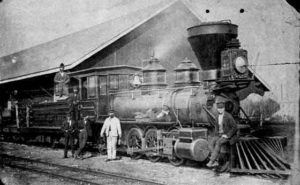
train

Columbus was becoming a major commercial and government center noted for its financial and legal institutions, the state penitentiary, restaurants, hotels, shops, buggy and carriage works, breweries, foundries, textiles, rock quarries, agriculture, and livestock.

The rising prosperity created new challenges to the highway system that would ultimately lead to a public outcry for different and more efficient modes of transportation.

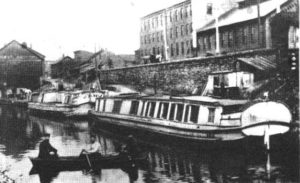
A viable alternative was the Ohio & Erie Canal, located between Cleveland and Portsmouth, completed in 1832 at a cost of $4.2 million. The 308-mile long waterway passed through Canal Winchester and Lockbourne, and was linked to Columbus by an 11-mile long feeder canal. The local channel system, fed by the Scioto River and Big and Little Walnut Creeks, was a major freight and passenger route that provided mud-free travel until its closure in 1904.

The slow, horse drawn canal boats were overshadowed by the “iron horse” railroads that began operation in Ohio in the 1850s. Notable railroads, such as the Baltimore & Ohio, and the Cleveland, Columbus, Cincinnati & Indianapolis, would monopolize long distance freight and passenger travel throughout the nation for nearly a century, establishing Columbus as a key station, roundhouse, and freight yard location.