Franklin County Engineer Facebook Feed

Franklin County Engineer

As a local public works agency headquartered in Columbus, Ohio, the Franklin County Engineer's Office is responsible for the maintenance and construction of 271 miles of county roadway and 351 county bridges, as well as upkeep of all county ditches, drains, retention basins, and other storm water facilities within the right-of-way of county roads in unincorporated areas. To meet the continuing development and infrastructure needs of Franklin County, the Engineer's Office utilizes the latest technologies for determining and maintaining roadway centerlines and boundaries; retracing and setting new monuments for original public land surveys; preparing geographic information system mapping for real estate tax assessments; and establishing precise countywide horizontal and vertical control to maintain uniformity in construction, surveying, and mapping.
Franklin County Engineer
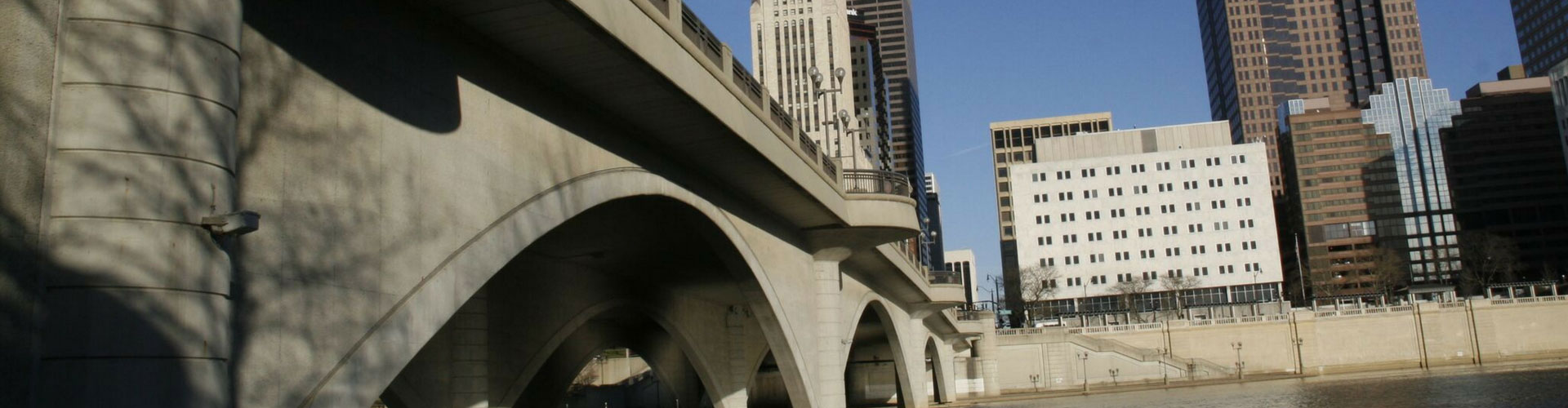
We're making progress on the West North Broadway Bridge rehabilitation project. Check out the latest update to see how crews are transforming this bridge for motorists, pedestrians, and cyclists.
Franklin County Engineer
We had a blast at the WABA - Westland Area Business Association Independence Parade! Thanks to everyone who joined us as we kicked off the Independence Day holiday and America's 250th celebration. It was a great day with the Westland community!
Franklin County Engineer
Beach Road between Amity Road and Plain City-Georgesville Road has reopened to traffic.

Thank you for your patience during construction. Please note that one additional closure will occur later this summer to complete additional work. Advance notification will be provided before that closure begins.
Franklin County Engineer
Today is International Women in Engineering Day. We are proud to celebrate the talented women engineers and engineering professionals on our team whose expertise, innovation, and dedication help build stronger communities every day.

Thank you for all you do! #WomenInEngineering
Franklin County Engineer
Cooke Road, between Karl Road and Maize Road, is closed, for a City of Columbus waterline installation. The closure will last approximately 90 days, weather permitting.
Franklin County Engineer
Out offices are closed today in observance of Juneteenth.Today, we honor this important day of remembrance, reflection, and celebration of freedom. Our offices will reopen on Monday, June 22, 2026, at 7:00 a.m.
Franklin County Engineer's Office
970 DUBLIN ROAD
COLUMBUS, OHIO 43215
(614) 525-3030
fracoeng@franklincountyengineer.org

Follow Us

Top
 

Highway Chronicle Chapter 4

Highway Chronicle Chapter 4

Original Franklin County Highways are Built
horse ride
trees

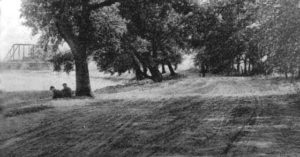
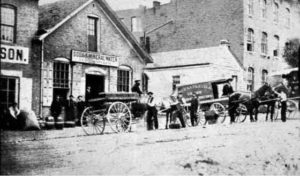
In 1826, the general assembly approved legislation incorporating the Columbus & Sandusky Turnpike Company to build a highway to the Lake Erie region. The 106-mile long turnpike was opened in 1834 for $75,000. The compacted clay and loam surface, however, proved to be inferior to macadam construction and was often described by disgruntled travelers as “the long line of mud.”

Corduroy roadways, consisting of logs embedded side by side across mud-prone areas, were constructed to provide passable surfaces. Heavy use eventually caused them to slump and become hazardously bumpy.

Building plank roads with 8-foot long boards laid upon an extensive 16-foot wide framework of stringers was another early innovation, but maintaining the wooden members was arduous work.

Despite the lack of uniformity in construction, a highway boom across Franklin County eventually included the Columbus & Portsmouth Turnpike (1847), Columbus & Harrisburg Turnpike (1849), Columbus & Worthington Plank Road, replacing the Franklin County section of the Columbus & Sandusky Turnpike (1850), Columbus & Groveport Turnpike (1850), Johnstown Plank Road (1852), Columbus & Granville Turnpike (1852), Franklin & Jackson Turnpike (1852), Columbus & Sunbury Plank Road (1852); and the Clinton & Blendon Plank Road to Westerville (1854).

These early thoroughfares were operated by incorporated highway companies that financed construction and maintenance costs through stock sales, toll collections, and government appropriations.