Franklin County Engineer Facebook Feed

Franklin County Engineer

As a local public works agency headquartered in Columbus, Ohio, the Franklin County Engineer's Office is responsible for the maintenance and construction of 271 miles of county roadway and 351 county bridges, as well as upkeep of all county ditches, drains, retention basins, and other storm water facilities within the right-of-way of county roads in unincorporated areas. To meet the continuing development and infrastructure needs of Franklin County, the Engineer's Office utilizes the latest technologies for determining and maintaining roadway centerlines and boundaries; retracing and setting new monuments for original public land surveys; preparing geographic information system mapping for real estate tax assessments; and establishing precise countywide horizontal and vertical control to maintain uniformity in construction, surveying, and mapping.
Franklin County Engineer
Rain may have been in the forecast, but it did not stop the successful 2nd Annual Spring Training Days at FCEO. Thank you to our outstanding presenters from FCEO, fellow government agencies, and community partners who shared their time, knowledge, and expertise with our team. Investing in learning, collaboration, and professional growth helps keep us strong as an organization and better prepared to serve the public.
Franklin County Engineer
Notice to Contractors: We are accepting bids on the Franklin County Engineer’s Office 2026 General Bridge Maintenance Contract. Visit: https://www.bidexpress.com/solicitations for more information.
Franklin County Engineer
Rohr Road, between Bixby Road and Creekside Parkway, will be closed beginning Monday, May 4, 2026, for road widening work. The closure will last approximately sixty (60) days, weather permitting.
Franklin County Engineer
April is National Records and Information Management Month, a time to recognize the work that helps public agencies stay organized, transparent, and efficient. At the Franklin County Engineer’s Office, accurate records and reliable information support infrastructure planning, project coordination, maps, permits, and public service. Thank you to those who help keep our agency informed, accountable, and operating effectively. #RIMMonth
Franklin County Engineer
Great energy, nice weather, and great community spirit! #TeamFCEO was proud to join Celebrate Trails Day at Scioto Audubon Metro Park. The annual event featured live music, local vendors, food trucks, activities, and fun for all ages while celebrating the value of trails in our community. #CelebrateTrails
Franklin County Engineer
Yesterday, #TeamFCEO welcomed the next generation to our office for Bring Your Child to Work Day! From big equipment to hands-on activities and behind-the-scenes fun, it was a day full of learning, laughter, and smiles. Thank you to everyone who helped make it a great day!
Franklin County Engineer's Office
970 DUBLIN ROAD
COLUMBUS, OHIO 43215
(614) 525-3030
fracoeng@franklincountyengineer.org

Follow Us

Top
 

Surveyor’s Journal Entry Twenty-Three

Surveyor’s Journal Entry Twenty-Three

The Dawn of Modern Surveying and Road Construction

By the early 1900s, the Franklin County surveyor was actively replacing stone survey monuments with iron pins. This endeavor was symbolic of the start of the modern age of surveying. The magnetic characteristics of the metal enabled the markers to be readily retrieved for the establishment of precise vertical control throughout the area.

Surveys started in 1899 by the U.S. Coast and Geodetic Survey (CGS), under the federal Department of Commerce, and the U.S. Geological Survey created the first coast-to-coast survey record of the nation, including precise topographic and hydrologic maps of Franklin County.

New local surveys and land use plans lead to the formal establishment of the “Columbus enclave” communities of Marble Cliff (1901), Grandview Heights (1906), Bexley (1908), Whitehall (1910) and Upper Arlington (1913).

Following the devastating Flood of 1913, the City of Columbus joined with the Franklin County Surveyor, The Ohio State University and the CGS to conduct a precise survey of 80 square miles of the city, using horizontal and vertical control, in preparation for land redevelopment and flood control projects.

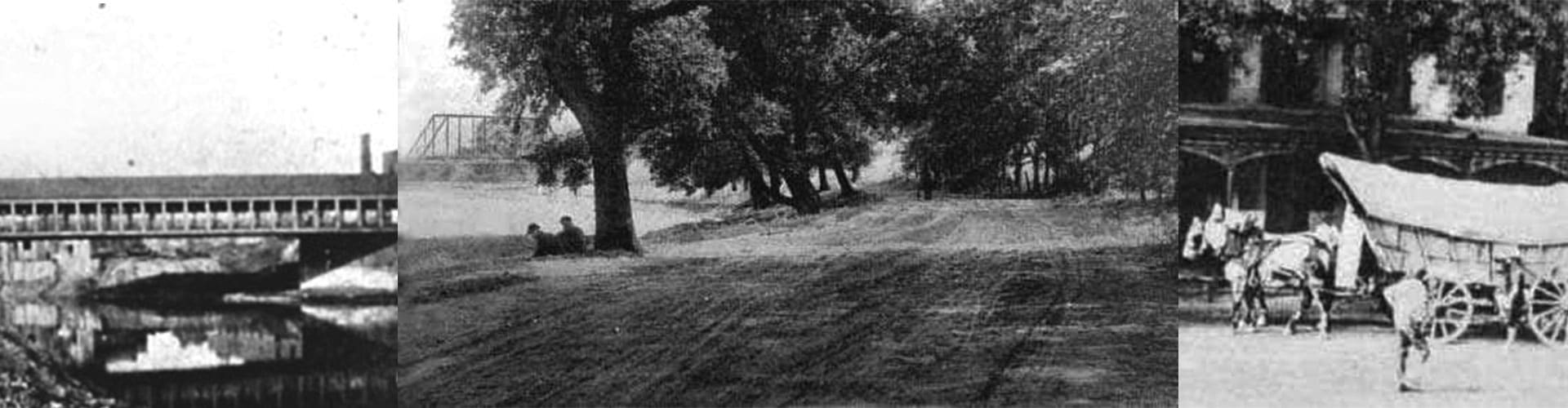
The start of the “Auto Age” brought about a renewed effort to improve the area’s transportation infrastructure. The introduction of asphalt and concrete pavements finally provided a lasting solution to the problem of muddy and rut-filled streets.

During the Great Depression, the Federal Works Progress Administration, Public Works Administration, and Civilian Conservation Corps put thousands of unemployed Ohioans back to work building roads, bridges, drainage, and landscape infrastructure. The average annual application of hot mix asphalt on the state’s thoroughfares rose more than 1,000 percent from 19,400 tons in 1929 to 210,000 tons by 1940.

Amidst this prolific period of construction, the Ohio Legislature officially redesignated the position of “County Surveyor” to that of “County Engineer,” in 1935, to officially provide for both the surveying and highway engineering needs of the state’s evolving counties. Only those who hold both an Ohio Professional Engineers (P.E.) and Professional Surveyors (P.S.) license may qualify for the publically elected office. Past Franklin County Surveyors and Engineers (link within site)